

Magnesium Deficiency in Oil Palm: Signs, Causes and How to Fix It

Magnesium deficiency is one of the most common nutrient problems on oil palm plantations in Malaysia, especially on sandy, peat and heavily leached soils. Left untreated, it reduces photosynthesis and, over time, fresh fruit bunch (FFB) yields. The good news is that it is easy to recognise and straightforward to correct.
Why oil palm needs magnesium
Magnesium sits at the centre of the chlorophyll molecule, the green pigment that captures sunlight. Without enough magnesium, the palm cannot make enough chlorophyll, photosynthesis slows down, and the palm has less energy to produce bunches. Magnesium also helps the palm move sugars and use other nutrients efficiently.
Signs of magnesium deficiency
- Orange or yellow older fronds: the classic symptom is “orange frond”, where the lower, older fronds turn yellow-orange while the younger fronds stay green. Magnesium moves inside the palm, so the palm pulls it from old leaves to feed new growth.
- Shading effect: leaflets exposed to the sun discolour, while parts that are shaded by other fronds often stay greener.
- Early frond death: in severe cases, affected fronds dry out and die early.
- Lower yields: fewer and smaller bunches over time.
Visual symptoms can look similar to other problems, so confirm with leaf and soil analysis before changing your fertilizer programme.
Common causes
- Poor soils: sandy, peat and highly weathered soils hold little magnesium.
- Heavy rainfall: magnesium is washed out of the root zone, a real issue in Sarawak’s climate.
- Too much potassium: high doses of muriate of potash (MOP) without enough magnesium can reduce magnesium uptake, because the two nutrients compete at the roots. Balancing K and Mg is important.
- Nutrient removal: every tonne of bunches harvested takes nutrients out of the field that must be replaced.
How to fix it: kieserite
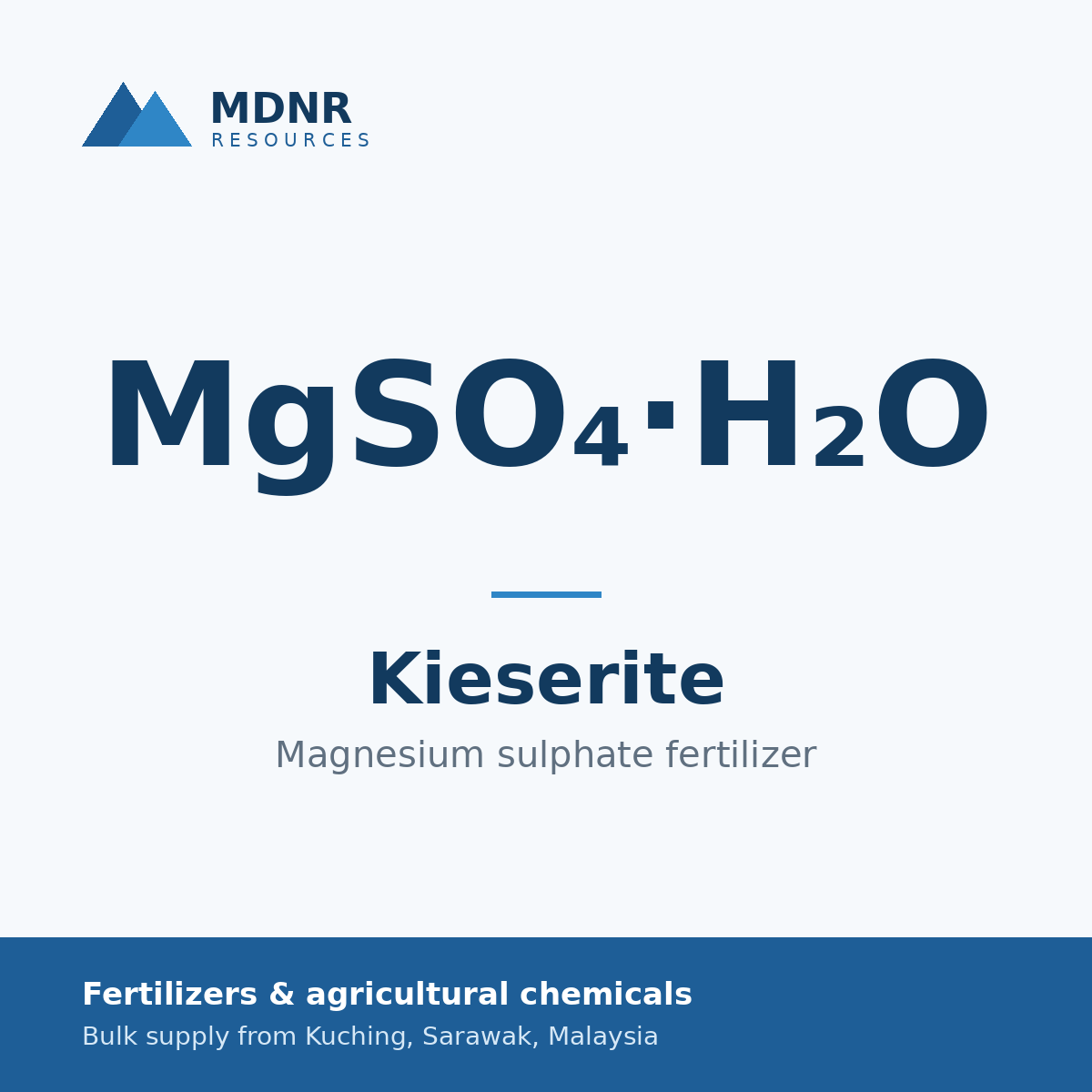
Kieserite is a natural magnesium sulphate fertilizer and one of the most widely used magnesium sources on Malaysian plantations. It supplies two nutrients at once:
- Magnesium to restore chlorophyll and green, productive fronds
- Sulphur, which oil palm also needs for protein and oil formation
Kieserite is water-soluble, so the magnesium becomes available to the palm relatively quickly compared with slower sources such as dolomite. Many plantations use both: dolomite for long-term soil improvement and kieserite for faster correction.
Application tips
- Base rates on analysis: the right amount depends on palm age, soil type and leaf magnesium levels. Work with your agronomist to set rates.
- Apply in the weeded circle or frond heaps: spread evenly where the active roots are.
- Avoid heavy rain: apply during moderate rainfall periods so the fertilizer dissolves without being washed away.
- Keep K and Mg balanced: review potassium and magnesium together rather than separately.
- Be patient: existing orange fronds will not turn green again. Look for improvement in new fronds over the following months.
Buy kieserite and MOP in bulk
MDNR Resources supplies kieserite, muriate of potash and other fertilizers in bulk to plantations, smallholders and distributors from Kuching, Sarawak. Request a quote for pricing and packaging options.