



PAC vs Alum: Which Coagulant Should You Use for Water Treatment?

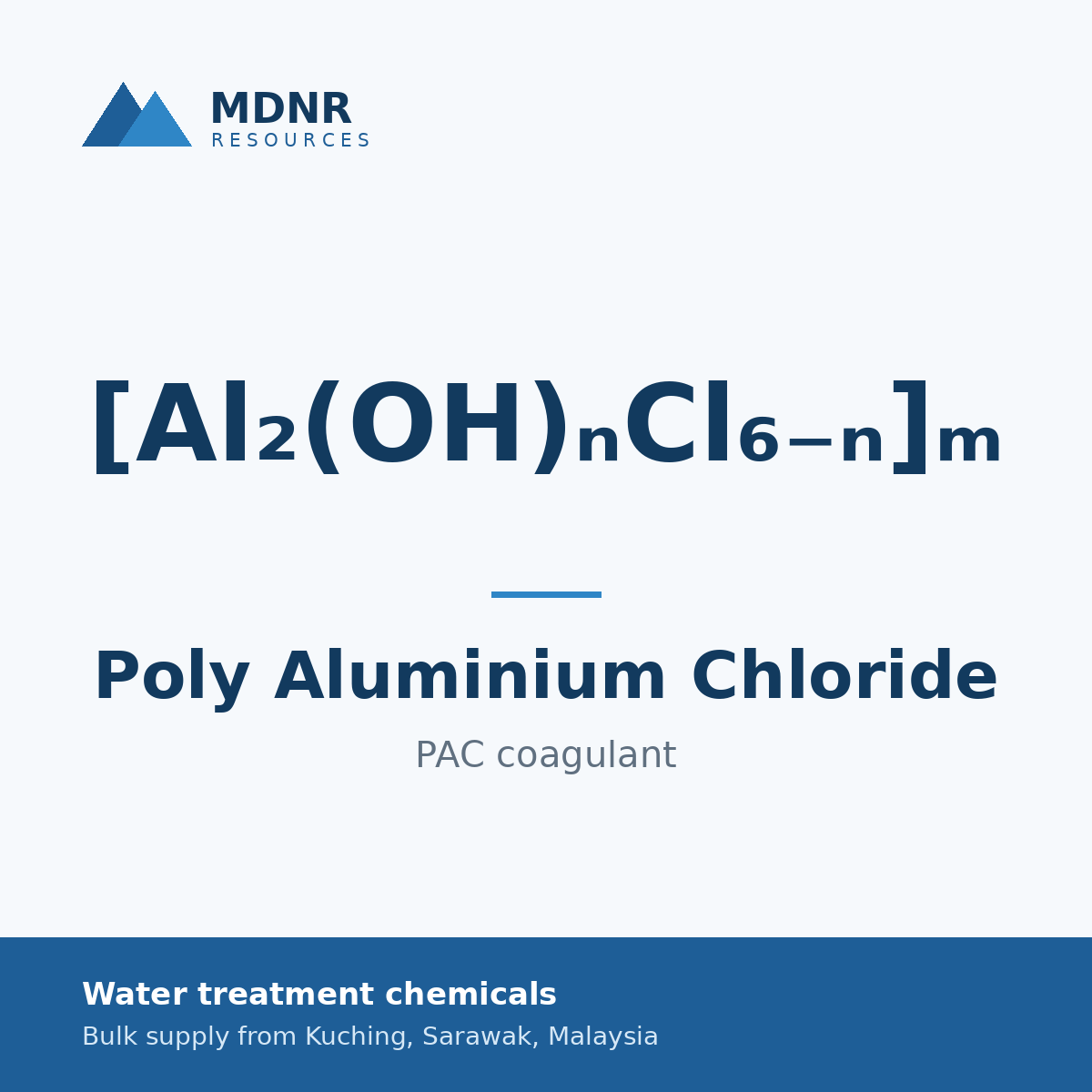
If you run a water treatment plant, a factory effluent system or a palm oil mill, you will almost certainly use a coagulant to remove suspended solids, turbidity and colour. The two most common choices are aluminium sulphate (alum) and poly aluminium chloride (PAC). Both are aluminium-based and both work, but they behave differently. This guide explains the differences so you can choose the right one for your water.
How coagulants work
Raw water contains tiny particles of clay, silt, organic matter and colour. These particles carry a negative charge, so they repel each other and stay suspended instead of settling. A coagulant adds positively charged aluminium that neutralises this charge. The particles can then stick together into larger clumps called flocs, which settle in a clarifier or are caught by a filter.
Aluminium sulphate (alum)
Alum has been used in water treatment for more than a century. It is well understood, widely available and usually the cheaper option per kilogram.
- Proven and simple: operators know how to dose it and most plants are designed around it.
- Lower price per kg: attractive for large plants treating stable, easy raw water.
- Consumes alkalinity: alum lowers the pH of the water. In soft or low-alkalinity water you often need to add an alkali such as soda ash or lime to keep the pH in range.
- Narrower working pH range: it performs best in a fairly tight pH window.
- More sludge: alum generally produces a larger volume of sludge that has to be handled and disposed of.
Poly aluminium chloride (PAC)
PAC is a pre-polymerised form of aluminium. Because part of the chemistry has already happened during manufacture, it acts faster and more efficiently in the water.
- Wider pH range: PAC works well across a broader range of pH, so it is more forgiving when raw water quality changes.
- Uses less alkalinity: it lowers pH far less than alum, which often means little or no pH correction chemical is needed.
- Faster, stronger flocs: flocs form quickly and settle well, which helps plants with short retention times.
- Less sludge: lower sludge volumes reduce handling and disposal costs.
- Handles difficult water: useful when turbidity swings after heavy rain, a common situation for river intakes in Sarawak.
- Higher price per kg: but because doses are often lower and less pH correction is needed, the total treatment cost can be similar or lower.
Side-by-side comparison
| Alum | PAC | |
|---|---|---|
| Price per kg | Lower | Higher |
| Effect on pH | Lowers pH noticeably | Small effect |
| Working pH range | Narrower | Wider |
| Floc formation | Slower | Faster |
| Sludge volume | Higher | Lower |
| Best for | Stable raw water, cost-focused plants | Variable or difficult water, plants short on capacity |
Which one should you choose?
Choose alum if your raw water is stable, your plant is already set up for it, and chemical cost per kg is your main concern.
Choose PAC if your raw water quality changes often, you struggle to keep pH in range, your clarifier is overloaded, or sludge disposal is expensive.
The only reliable way to decide is a jar test: treat samples of your actual raw water with different doses of each coagulant and compare the clarity, floc size, settling speed and final pH. Compare the total cost per cubic metre treated, including any pH correction chemicals and sludge handling, not just the price per bag.
Get samples and pricing
MDNR Resources supplies both poly aluminium chloride (PAC) and aluminium sulphate (alum) in bulk from Kuching, Sarawak, along with other water treatment chemicals. Request a quote and ask for a technical data sheet so you can run your own jar tests.
One thought on “PAC vs Alum: Which Coagulant Should You Use for Water Treatment?”