


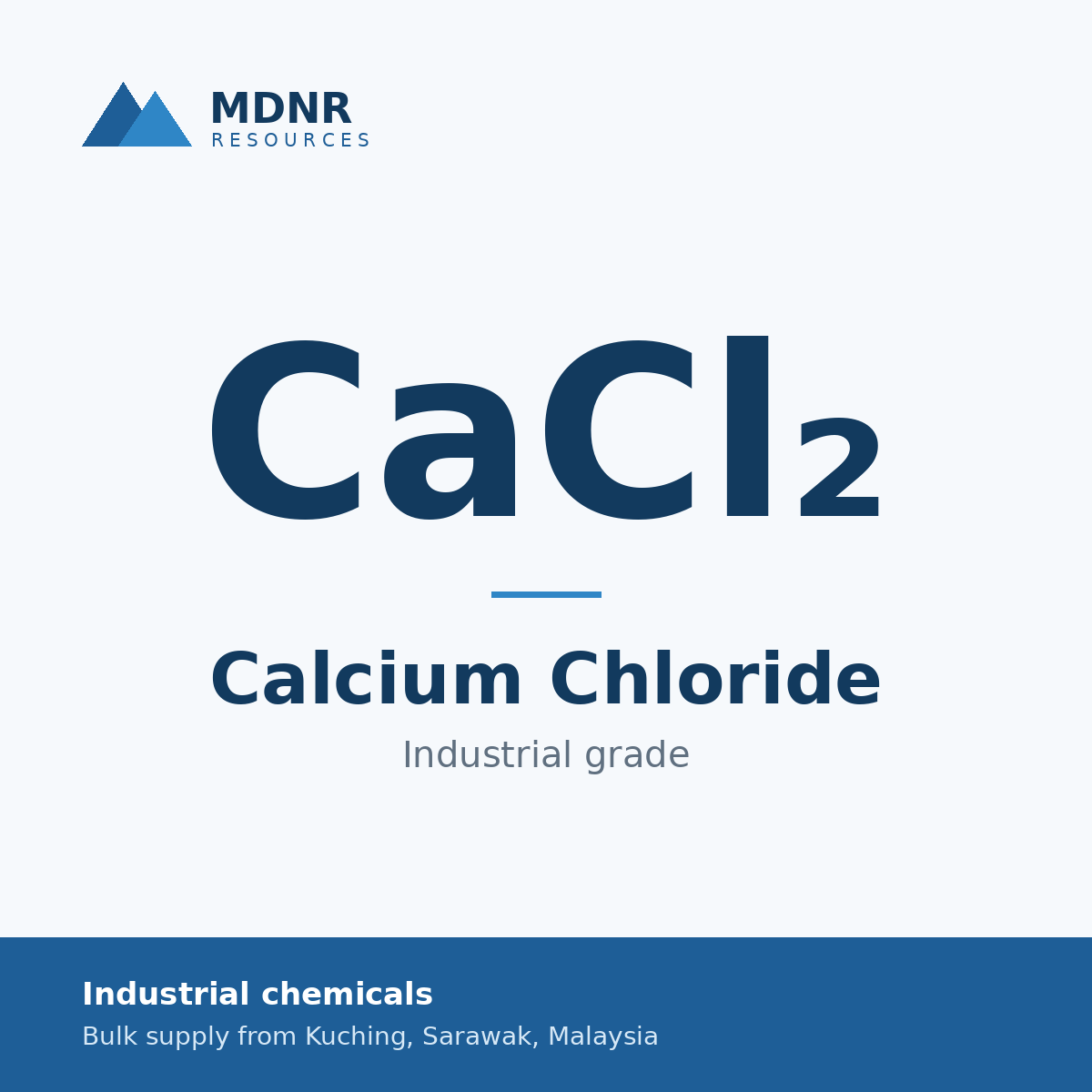
Calcium Chloride
Bulk calcium chloride for concrete acceleration, dust control, drying and oil and gas applications.
Calcium Chloride Supplier in Malaysia
Calcium chloride (CaCl₂) is an inorganic salt that strongly absorbs moisture from the air and releases heat when it dissolves in water. It is highly soluble and forms dense brines. These properties make it useful in construction, oil and gas, dust control, drying and food processing.
MDNR Resources supplies calcium chloride in bulk from Kuching, Sarawak to contractors, oilfield service companies, manufacturers and distributors across Malaysia.
Forms of calcium chloride
- Flakes (dihydrate) – typically 74–77% CaCl₂. The most common and economical form for general industrial use.
- Anhydrous prills or granules – typically 94–97% CaCl₂. Higher strength, dissolves quickly with strong heat release; preferred for drilling fluids and desiccants.
- Powder – for fast dissolving and blending applications.
- Food grade – for food processing uses (E509).
Applications of calcium chloride
- Oil and gas – high-density brines for well completion and workover fluids, and in drilling muds to control shale swelling.
- Construction – accelerating the setting of concrete, especially plain (non-reinforced) concrete and precast work.
- Dust control – keeping unpaved roads, plantation roads, mine sites and construction sites damp and dust-free.
- Desiccant and moisture absorber – in container and cargo dehumidifiers and drying of gases and liquids.
- Food processing – firming agent for canned fruit, vegetables and tofu, and in cheese making (food grade).
- Water treatment – increasing calcium hardness in pools and some process waters.
- Refrigeration – brine for cooling systems.
Typical specifications
- Chemical formula: CaCl₂ (flakes: CaCl₂·2H₂O)
- Purity: about 74–77% (flakes) or 94–97% (anhydrous)
- Appearance: white flakes, prills, granules or powder
- Magnesium and alkali chlorides: low, typically below 1–2%
- Solubility: highly soluble; dissolving is exothermic (releases heat)
Exact values depend on the grade supplied. A certificate of analysis (COA), technical data sheet (TDS) and safety data sheet (SDS) are available on request.
Important note for concrete use
Chlorides can promote corrosion of steel reinforcement. Calcium chloride is therefore generally not recommended for reinforced or prestressed concrete. Always follow the applicable concrete standards and your engineer’s specification on chloride limits.
Packaging and delivery
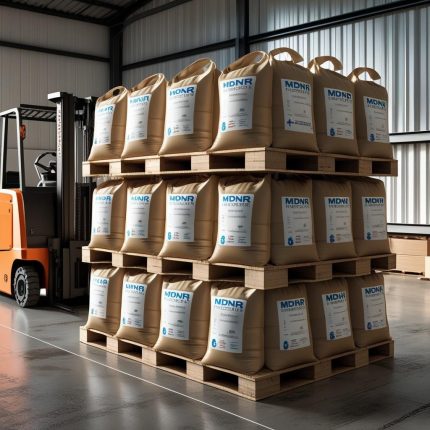
Calcium chloride is commonly packed in 25 kg moisture-proof bags, with 1-tonne jumbo bags possible for oilfield and high-volume users. Tell us your grade, volume and delivery location and we will confirm packaging and lead time.
Handling and storage
Calcium chloride absorbs moisture rapidly and will turn to liquid if left exposed, so store it in sealed bags in a dry, covered area. When dissolving, add it slowly to water (never water to the solid), as it releases a lot of heat. It can irritate eyes and skin, so use gloves and eye protection. Follow the SDS.
Frequently asked questions
What is the difference between flakes and anhydrous calcium chloride?
Flakes contain water of crystallisation and are about 74–77% CaCl₂. Anhydrous grades are about 94–97%, so you need less product for the same effect.
Is calcium chloride safe for food?
Food grade calcium chloride is an approved food additive. Industrial grades must not be used in food.
Do you supply outside Sarawak?
Yes. Contact us with your location and quantity for a quotation.
Related products
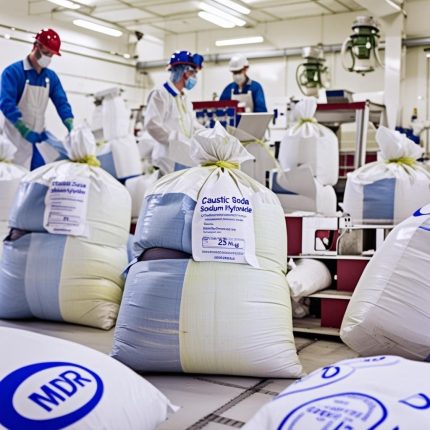
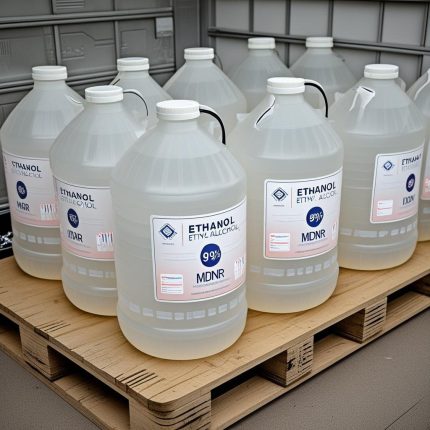
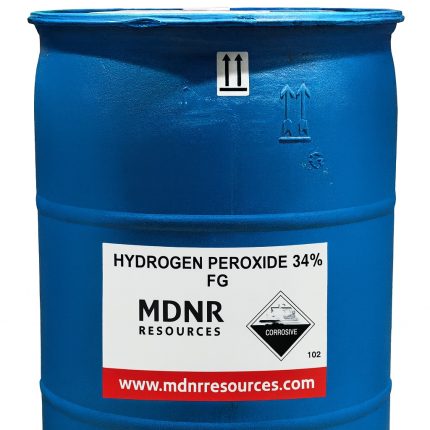
Industrial customers also buy sodium chloride, caustic soda, soda ash and hydrochloric acid from MDNR Resources.

Reviews
There are no reviews yet.